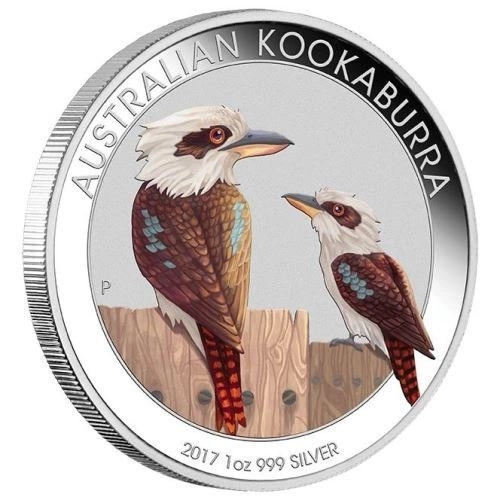
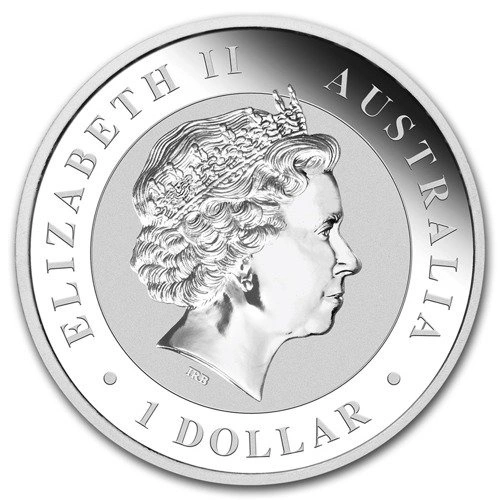
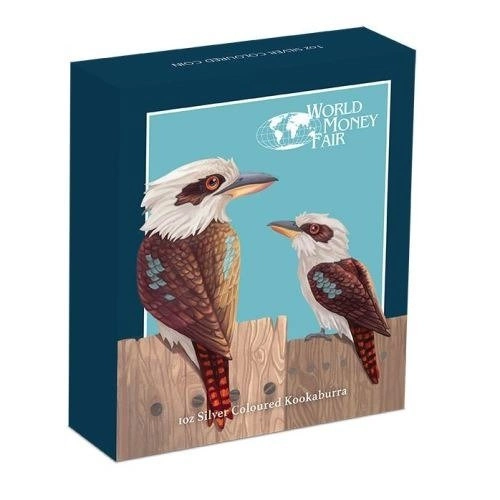
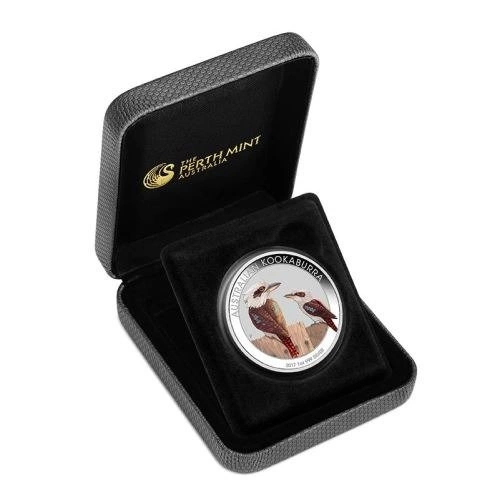
Kookaburra 1 oz Silver 2017
Polar Bear (Silver Polar Bear) 0.5 Ounces Silver "White bear (Ursus maritimus) is a species of large carnivorous mammal in the bear family, inhabiting the Arctic. It is an apex predator within its range. Its thick fur and layer of fat protect it from the cold. The hairs that make up the bear's coat are semi-transparent; the coat as a whole is usually white or cream in colour, thus enabling the animal to camouflage itself well. The skin is black in colour. The polar bear has a short tail and small ears, which helps it reduce heat loss. Its relatively small head and long, tapering body give it a streamlined shape useful for swimming. It is a mammal with an almost marine lifestyle, needing only a patch of floating ice and food found in the water to survive, as well as a place to give birth and raise its young. Its systematic (Latin) name Ursus maritimus means 'sea bear'. It has adapted to life on land, sea and ice. Chosen as the mascot of the 1988 Winter Games in Calgary, Canada". The Royal Canadian Mint was officially opened in 1908 by Governor General Earl Grey, minting the first fifty-cent coin produced on Canadian soil. After the coin began to be issued, the only competitor to the coin was the South African Krugerrand, but due to the apartheid boycott, this was not available to the general public. This made the maple leaf gold coins very popular. Silver is mainly used as a precious metal. Sterling silver alloyed with copper is used for jewellery, crockery and cutlery. It is also used in the production of medals. High-end musical instruments, such as flutes, are made from this alloy. Silver is a very malleable and malleable (slightly harder than gold), single-value group 11 metal, with a shiny lustre that can be easily polished.
*
The obverse side bears the likeness of Queen Elizabeth II, the denomination ($8).The reverse of the coin shows an image of a polar bear, as well as the grade in which the coin was struck (Ag .9999) and the name of the country (Canada) in which it is produced
Do you need help? Do you have any questions?Ask a question and we'll respond promptly, publishing the most interesting questions and answers for others.