
Mints from around the world
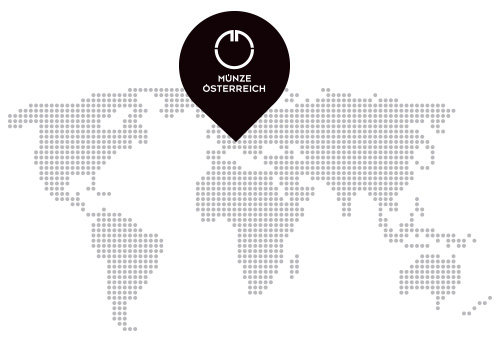
Mints from around the world
Austrian Mint
The foundation for today's Austrian Mint (Austrian Mint) was laid by Richard the Lionheart himself, who paid as much as 12 tons of silver to Austrian Prince Leopold V for his freedom. The prince decided to turn his loot into coins, with which he contributed to the beginning of Austria's minting history, which is now more than 800 years old.
Learn more...
Austrian Mint
History of creation
The foundation for today's Austrian Mint (Austrian Mint) was laid by Richard the Lionheart himself, who paid as much as 12 tons of silver to Austrian Prince Leopold V for his freedom. The prince decided to turn his loot into coins, with which he contributed to the beginning of Austria's minting history, which is now more than 800 years old.
In historical accounts, the first mention of the existence of a Viennese mint appeared ca. 200 years later. Initially it was located near Hoher Markt, to move over time to Wollzeile, then to Prince Eugene's winter palace in Himmelpfortgasse, and finally, in the first half of the 19th century, to settle on Heumarkt, in the center of Vienna, where it still operates today.
Over the years, several competing mints were established in Austria, located, for example, in cities such as Graz, Krems, Salzburg, Innsbruck and Villach, but with the establishment of the Republic of Austria in 1918, their operations were terminated. The Vienna mint then became the main and only mint in the country and maintains this position to this day.
Under its current name - Münze Österreich AG (Austrian Mint) has been operating since 1989, in which it was also recognized as a subsidiary of the Austrian National Bank.


Curiosity
Austrian Mint boasts the title of one of the oldest mints in the world. Its history of more than 825 years perfectly illustrates how approaches and methods of minting coins have changed over time.
In the early stages of development, coins were struck with a special hammer. This method was used until the 16th century, when the hammer began to be replaced by more and more advanced tools - the roller, rocker or screw press. This allowed to significantly increase the scale of production and at the same time significantly improve the quality of the coins produced. The solutions used at that time laid the groundwork for the methods and tools used today, which are based on the same assumptions, but offer incomparably higher efficiency - allowing the minting of up to 750 coins per minute!
A significant moment in the history of Austrian Mint's development was undoubtedly the establishment of an academy of engraving in 1733. It was engaged not only in the training of successive generations of craftsmen, but also in the production of the most prestigious and timeless coins, which, as miniature works of art, delighted with precision workmanship and the highest quality.
Production volume
Owned by the Austrian National Bank - Austria Mint boasts a state-of-the-art machinery park that provides it with a huge production capacity. With a workforce of less than 200, the mint beats the approx. 350 million coins.
Much of the credit for this goes to the most iconic coin in the mint's range - the Vienna Philharmonic. In 2020, the mint minted nearly 1.5 million pieces of gold coin, more than 7 million silver coin and about. 50 thousand platinum. Such a large scale of production confirms the huge market interest in the Viennese Philharmonic and reinforces the belief that an investment in just this coin allows you to forget about the problem of liquidity of such an investment.


Popular products
Austrian Mint's wide and extremely diverse range is full of real gems and coins that any investor or collector would like to include in their collection, but invariably for years the true bestseller has remained the Vienna Philharmonic. It is an investment coin that ranks among the six most popular gold coins in the world. An investment certainty that guarantees the highest quality workmanship, purity of bullion and high liquidity, all things that investors care about. It is also worth mentioning that the coin is extremely thin (2 mm), which significantly affects the level of security - almost any attempt to counterfeit it ends in failure. The obverse of the coin is decorated with the legendary organ of the Vienna Philharmonic Orchestra, and the reverse with eight iconic instruments of the Vienna Orchestra: .
four pairs of violins, cello, horn, harp and bassoon
The Austrian ducat also boasts huge popularity. Gold ducats were minted from the early 16th century until 1915, when wartime disturbances led to a halt in production. Among other reasons, all ducats minted today refer to this date. The obverse of the coin is decorated with an image of Franz Joseph I, while the reverse is decorated with the Habsburg coat of arms and the aforementioned date 1915.
Popular Values:
Casa de Moneda de México
Spanish conquistador Hernan Cortes in 1519 led an expedition into what is now Mexico, conquered the Aztec empire and began prospecting the conquered territory for gold and silver deposits. In 1535, Antonio de Mendoza, by decree of the Spanish Crown, established the first mint in this part of the world, known today as the Casa de Moneda de Mexico or Mexican Mint.
Learn more...
Casa de Moneda de México
History of creation
Spanish conquistador Hernan Cortes in 1519 led an expedition into what is now Mexico, conquered the Aztec empire and began prospecting the conquered territory for gold and silver deposits. In 1535, Antonio de Mendoza, by decree of the Spanish Crown, established the first mint in this part of the world, known today as the Casa de Moneda de Mexico or Mexican Mint.
In its early days, the mint minted the so-called Spanish dollar. It was a silver coin valued at 8 Spanish reals, which was widely used in trade almost all over the world - Europe, the Far East Oceania and the Americas. As a result, the Spanish dollar became the first world currency and contributed to the creation of many national currencies - including the m. in. uS dollar, Chinese yuan or Japanese yen.
The silver used to make the coin was imported from Portugal and Spain for years, but at some point this ceased to make economic sense.
The real breakthrough came with the discovery in 1592 of large deposits of silver in Mexico, which to this day place the country among the largest producers of this bullion in the world.
After independence in 1821, the mint's operations were severely threatened. Several smaller workshops operating throughout the country were spun off from one centralized mint in Mexico City. One of them was located in San Luis Potosi, where the Casa de Moneda de Mexico now operates.

Curiosity
Casa de Moneda de Mexico, also known as the Mexican Mint, is the national mint, responsible for minting all Mexican coins. Interestingly, it has an unusually long statement in this field, which is the envy of many a mint. Indeed, the origins of the mint date back to 1535, putting Casa de Moneda de Mexico among the oldest mints in the world. In both South America and North America, there is no other mint that can boast as long a history of existence.
The mint was built on the remains of Moctezuma's Black House (Casa Denegrida de Moctezuma), part of the royal palace where the last Aztec emperor meditated. Coin minting ceased at the site in 1850, and the former site of the mint was renamed the National Museum of Culture (Museo Nacional de las Culturas). Since 1983, the production of coins has taken place exclusively in San Luis Potosí.


Production volume
However, to get an idea of just how large a production we're talking about, it's worth noting that last year alone, the Mexican Goddess of Liberty was minted in silver in nearly 0.5 million pieces, of which 450,000 pieces went to the 1 oz silver bullion coin. For comparison, in 2016 alone, the one-ounce variant of the coin was minted in more than 1.4 million pieces. In much smaller volumes, the coin is minted in gold - last year the production volume in all size variants reached only a few thousand copies.
However, to get an idea of just how large a production we're talking about, it's worth noting that last year alone, the Mexican Goddess of Liberty was minted in silver in nearly 0.5 million pieces, of which 450,000 pieces went to the 1 oz silver bullion coin. For comparison, in 2016 alone, the one-ounce variant of the coin was minted in more than 1.4 million pieces. In much smaller volumes, the coin is minted in gold - last year the production volume in all size variants reached only a few thousand copies.
In its long history, the mint has exported its products to many countries, on all continents - m. in. to Germany, USA, Switzerland, Argentina, Peru, Portugal, Egypt, Thailand or Guatemala.

Popular products
Although coins minted in Mexico are not overly popular, undoubtedly the extremely long and colorful history of the local mint attracts the attention of potential investors and collectors.
See all coinsThe most popular Casa de Moneda de Mexico bullion coin is undoubtedly the Mexican Libertad, which debuted in a gold version in 1981 and a silver version in 1982. It is still beaten to this day and comes in many size variants. The obverse of the coin is decorated with the coat of arms of Mexico, an image of an eagle holding a snake in its beak. The reverse depicts a statue of the winged Mexican Goddess of Liberty against a background of mountain peaks. Interestingly, the coin does not have a minted denomination, but is a full-fledged means of payment within Mexico.
Popular coins:
China Gold Coin Corp
The State Council approved the establishment of China Gold Coin Incorporation (CGCI) in 1987, and since then it has been the only company engaged in minting precious metal commemorative coins directly linked to the People's Bank of China. It also performs an important function in the process of money issuance by the Central Bank of China. Learn more...
China Gold Coin Corp
History of creation
The State Council approved the establishment of China Gold Coin Incorporation (CGCI) in 1987, and since then it has been the only company engaged in minting precious metal commemorative coins directly linked to the People's Bank of China. It also performs an important function in the process of money issuance by the Central Bank of China.
In its initial phase of development, CGCI built a distribution network primarily in the domestic market, but quickly went outside the country with its offerings. An important step in its history was the establishment of a distribution center in Hong Kong called China Great Wall Coins Investment Ltd, through which CGCI was able to establish partnerships with other mints and banks in Asia, America and Europe.
Over time, the Hong Kong center was joined by 3 others in Beijing (Beijing Kaiyuan China Gold Coin Trade Center), Shenzhen (Shenzhen Trade Center) and Shanghai (Shanghai Gold Coin Investment Co., Ltd.) and 90 franchised distributors operating in large and medium-sized cities across the country.

Growing demand for the products offered led to the establishment of an upgraded production facility - Shenzhen Guobao Mint Ltd, specializing in the production of precious metal commemorative coins, and Beijing Gold Coin News Ltd., which is a professional institution faced with the task of popularizing knowledge of coins and ways of their production.

Curiosity
The company's minimalist logo, which refers to the three coins captured in motion, relates directly to the business while emphasizing the international nature of the company and its most iconic coin. The fluid and dynamic movement of the coins moving and overlapping at different angles is reminiscent of the lively and joyful movement of pandas, which is captured on the reverse of the iconic coin - Chinese Panda. The delicate outlines of the coins that make up CGCI's logo also evoke satellites orbiting the earth, to emphasize the international nature of its operations.
Production volume
Each year, the People's Bank of China announces a plan for the issuance of commemorative collector coins, which includes specific coin collections, precious metals used for production, and planned volumes.
Plans for 2022 include minting 14 programs (coin collections), which, after taking into account the different size variants and bullion used, translates into 91 unique configurations. The first item on the list is the iconic Chinese Panda, which will be produced in the silver version only (30g) in an edition of 10 million copies, and in the gold version in an edition of 1 million copies. The large 2-million mintage also boasts an 8g silver bullion coin, "New Year Celebration" and "The 24 Solar Terms - Stories of Time," for which as many as 24 issues of 60,000 copies each have been planned.

Popular products
Although the coins minted by China Gold Coin Corp are not the first choice coins for investors looking to safely invest their capital, it cannot be denied that the mint's offering is full of real gems.
One of the most iconic bullion coins currently produced by China Gold Coin Corp is undoubtedly the China Panda, which has changed its image every year since 1982. The coin is not only an effective way to secure the value of money over time, but also an interesting addition to any numismatic collection. The Chinese Panda is issued by the People's Bank of China, is guaranteed by it and is legal tender within the People's Republic of China. The obverse of the coin is decorated with the Temple of Heaven in Beijing (Tian Tan), while the reverse depicts two adorable pandas playing in the snow and the value of the coin expressed in yuan.
A special limited-edition collection of the Chinese Panda was launched by the mint in late 2021 to celebrate its 40th anniversary. Presented at the time were 14 coins ranging from 1g to 1kg, made of gold, silver or platinum, with a total mintage of nearly 14 million pieces!
Of course, CGCI's offerings don't just end with the Chinese Panda. Also of interest are coins commemorating the New Year - "2022 New Year Celebration", the Beijing International Coin Exposition - "Beijing International Coin Exposition" "Beijing International Coin Exposition" or the Beijing Winter Paralympic Games - "Beijing 2022 Paralympic Winter Games".
Popular coins:
Leipziger Edelmetallverarbeitung
The privately owned German mint Leipziger Edelmetallverarbeitung (LEV) operates in the small village of Rötha, near Leipzig. What is worth emphasizing, this location is not at all accidental - as it refers to the long tradition of Saxon silver processing. Intensive mining of the precious bullion was initiated in the areas of about. 100 km Ore Mountains already more than 800 years ago.
Learn more...
Leipziger Edelmetallverarbeitung
History of creation
The privately owned German mint Leipziger Edelmetallverarbeitung (LEV) operates in the small village of Rötha, near Leipzig. What is worth emphasizing, this location is not at all accidental - as it refers to the long tradition of Saxon silver processing. Intensive mining of the precious bullion was initiated in the areas of about. 100 km Ore Mountains already more than 800 years ago.
Bullion mined in the mountains was then transported to Leipzig, where it found buyers, coming to the city from different parts of the country. In 1218, Germany's first silver market was established here, and over time the growing scale of the business made the city one of the most important silver trading centers in the region.
The Leipziger Edelmetallverarbeitung mint specializes in producing high-quality investment products not only from silver, but also from gold, platinum, palladium or copper. It is part of the Geiger Group, which is headquartered in the meticulously restored Baroque palace of Güldengossa near Leipzig. The building is one of the symbols of the mint and is often a motif stamped on gold, silver or copper bars.


Curiosity
Leipziger Edelmetallverarbeitung is a mint with a state-of-the-art machine park, which allows it to respond flexibly to changing demand over time and fulfill incoming orders from different parts of the world at short notice. Its range of services includes both production and minting of various investment products - bars, coins or medals. What Leipziger Edelmetallverarbeitung is known for is undoubtedly the precision of its workmanship and the high level of safeguards used.
How to recognize Leipziger Edelmetallverarbeitung products? Particularly distinctive are the bars, coming from the "Security Line" collection, which have as many as four security features. We are talking about the ribbed edges, which additionally prevent abrasion and scratching, the mirror-like surface, the serial number and the honeycomb structure decorating the bottom of each bar, which is additionally filled with the company's logo - "LEV". Such an unusual way of marking their products makes Leipziger Edelmetallverarbeitung bars not only unique, but, what is important from the point of view of the average investor - much safer, as they are more difficult to counterfeit.
Production volume
Leipziger Edelmetallverarbeitung does not publish information on its website about the volume of production realized, but it is safe to estimate that it is talking about tens of millions of coins and bars minted each year. Historical production volumes Popular j coin in the manufacturer's range, i.e., silver Noah's Ark, has repeatedly exceeded the level of one million copies per year. The production of gold coin is much smaller and reaches the level of several thousand copies per year.


Popular products
The offer of the Leipziger Edelmetallverarbeitung mint is very broad and is largely based on bars, which are cast from various precious metals. The company's own product range consists primarily of bars decorated with the aforementioned Güldengoss Palace motif, as well as bars from the "Security Line."
Investors who value investment coins more than bars will also find something for themselves in Leipziger Edelmetallverarbeitung's offer. By far the most popular coin minted in Rötha is the Armenian bullion coin - Noah's Ark. It is a currency issued by the Central Bank of Armenia and is a full-fledged means of payment within the country. Its obverse is decorated with the ark, crossing the rough sea at sunrise, and Mount Ararat visible in the background. The whole is completed by the dove in the foreground, which holds an olive branch in its beak. The reverse depicts Armenia's coat of arms and informs about the coin's denomination - 100 drams.
Another interesting series of coins minted by Leipziger Edelmetallverarbeitung is the Giants of the Ice Age (Giants of the Ice Age) series. It consists of 8 coins, each of which presents a different animal. Coins are issued by and guaranteed by the government of Ghana - they are full legal tender within the country. The obverse of the coins is decorated with an image of an animal and miniatures of animals, making up the entire series. In turn, the reverse side features Ghana's coat of arms and the denomination - 500 cedi.
Popular coins: