
Gold in the service of Soviet Union, part 3
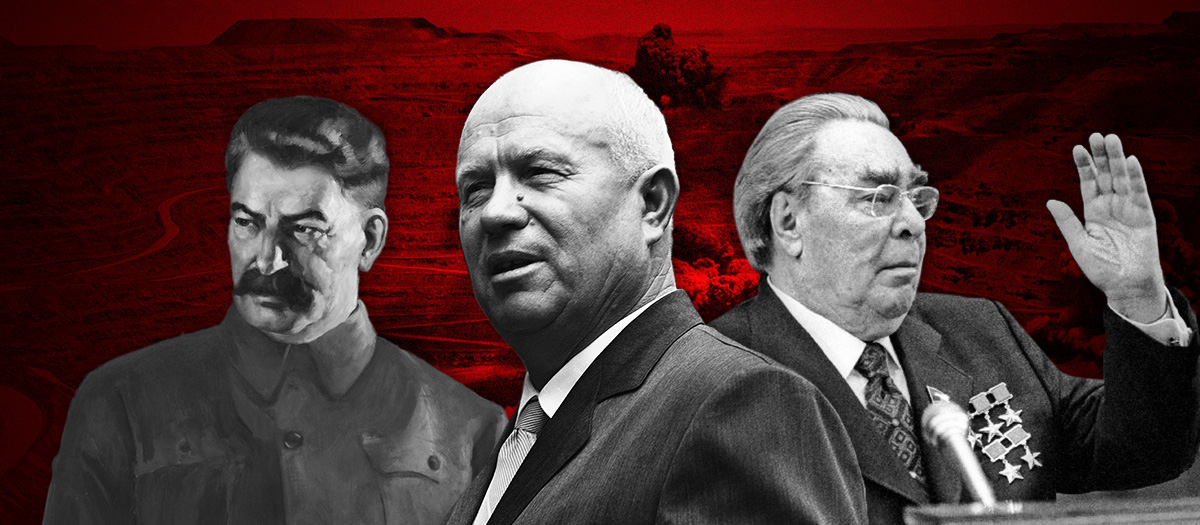
 See English version

We continue our considerations on the subject of historical economy for connoisseurs and not only. We’re discussing history of gold and its use in Bolshevik Russia and USSR in the years 1918-1991.
Post-war
The USSR entered Second World War as an aggressor. Then it turned into a victim, to become the “victorious ally” at the end of it. In doing so, it was responsible for numerous crimes directed against prisoners of war, independence guerrillas in “liberated” areas, on civilian population and national minorities.
A year after the end of the war, the gold mining sector was transferred to the administration of the Ministry of Internal Affairs. In reality, the name meant nothing more than Lavrentiy Beria and the all-powerful NKVD. Murderers of the NKVD.... pardon... Ministry of Internal Affairs, very quickly set about “reforming” the sector in their own style. Glavspetsvetmet was created on the basis of Glavzoloto, which in militarized way quickly reorganized forced labor camps into mines. Using special powers, the Interior Ministry vigorously began technically equipping enterprises and launching new ones. A fairly powerful and mobile, well-equipped geological department was established. However, the new exploration model lacked the calculation methods already introduced before the war, such as the economics of extraction.
In 1947, the Model Charter for exploration artel in the Glavspetsvetmet system was approved, followed by a resolution “On measures to increase traditional gold and platinum mining.” All this meant a forced labour regime to the limit of human capacity, and... negligible labour costs for prisoners, which meant, USSR was able to deliver world's “cheapest” gold. Admittedly, over time an economic calculation has been introduced, which showed that costs exceeded profits, but not before Khrushchev.
Among other things, Gulag gold was supposed to form the basis for the abolition of the goods rationing system, free up other resources needed for Soviet nuclear program, finance reconstruction of country, etc. The most important point here was need to raise the country from ashes in the context of the rapidly developing Cold War. Despite the fact that the gold dollar standard was established worldwide and the USSR was present at Bretton Woods, it did not ratify the agreement. In addition, until Stalin's death in 1953, USSR did not officially sell even an ounce of gold abroad. Country's gold reserves were to serve as a guarantor of the soviet financial autarky and as a Cold War mobilization reserve. In line with the ideological assumptions of the “besieged fortress.”

Gold production, consumption, sales and reserves in the USSR 1945-1964 Estimates from 1978 Source: Siegfried Schoppe, Myth and reality of the soviet gold policy
Soviet gold production for the early postwar period can only be estimated. It is known that Siberian infrastructure was unaffected by warfare, but there had been problems with proper maintenance of equipment. Another issue was loss of numerous operators and specialists. Another was relocation of prisoners and forced laborers. And so, for the early post-war period, sources fluctuate significantly. Most likely, we are talking about about 70 t. in 1946 and an increase in official production to about 100 t. in 1950. Let us recall on this occasion - according to Russian data obtained from Soviet archives, in 1939 Glavzoloto provided 64 t. of bullion, while the Gulag, in 42 mines, prisoners 66 t. of gold, which were not in Glavzoloto’s balance sheets.
USSR's accumulation of gold was reflected in the 1950 monetary reform. And although the USSR, as we have already mentioned, did not ratify the Bretton Woods Agreement, it “fixed the ruble with gold” for the matter of international trade and prestige.
The Central Statistics Department of the Soviet Union, carrying out Stalin's order, recalculated the ratio of the new ruble to the dollar in the late winter of 1950. Comparison was made on the basis of purchasing power and the most favorable commodities were selected. Thus, in the outerwear category, it was cost of good quality American coats and repainted Soviet military coats. In the footwear category - leather boots and military tarp boots, etc. And it was assumed that USSR goods initially had better quality and durability. An adjustment of 15% was added to results to compensate for fluctuations in the value of the dollar. The result was ratio of 1 US dollar to 14 Soviet rubles.
Report was presented to the “genius of the nations.” According to the testimony of high-ranking eyewitnesses present, Stalin crossed out figures given and imposed a resolution - “No more than 4 rubles.”
The very next day, 28.02.1950, a government decree was issued establishing pegging ruble with gold at 0.2221 grams per 1 and the cost of the yellow metal itself at 4.45 rubles per 1 gram. Fixing of the price of the Soviet ruble against the USD happened in accordance with Stalin's instructions. Similar transformations were carried out in all the countries of the socialist camp, making it possible to agree on a common financial and currency exchange rate, including on the introduction of the golden ruble as an interstate means of payment.
In approving the document, Stalin stated that America had printed during war an excessive amount of paper dollars which it would now want to get rid of by any means necessary to prevent.
Gold backed currency of BRIC... of the Soviet Union....
Some ideas have roots farther in the past than we might expect. Many months back we decided to discuss the theoretical concept of the BRICS currency. Not denying it completely, but only presenting the theoretical assumptions behind it, set within the framework of the modern monetary system. We tried to make the series educational, because the amount of stupidity, misinformation and misinterpretation surrounding us was enormous and did grow exponentially. De-dollarization? It exists, but the USD is holding up well, will not die, and remains an extremely strong currency in both trade and reserves. Even in its weakening. Gold / commodity based currency? How to arrange convertibility? How to organize storage? Especially if some are rare and highly valued by the market. The dollar’s killer? Let's compare size and function of the most popular reserve assets, and we will get the answer to the question so asked. Out of our considerations came trilogy “Gold in the BRICS common currency concept” and then another article “The rise and fall of the BRICS gold currency.”
Consulting with the leaders of Chinese and Mongolian governments in Moscow in 1951, Stalin said that after the transition of the countries' national currencies to gold, it would become important to introduce a gold cash equivalent for settlements in mutual trade. To this end, a special international commission was set up, which included Rakosi from Hungary, Gottwald from Czechoslovakia, Grotewohl from East Germany and Zhou Enlai from China.
Between 1952 and 1953, as many as five options were developed for the transition of payments between socialist countries to a currency pegged to gold. Introduction of the new unit of account was planned for 1955-1960. Stalin favored the “sooner the better” approach, and objected that transition should be preceded by economic growth, unification of economic and social planning systems and an increase in the purchasing power of the state currencies of socialist countries. Shortly before his death, dictator approved a 1957 deadline, however, expressing concern that without his oversight project might not come to life.
However, the 1950-1953 Korean War, which consumed some of the USSR's financial resources, stood in the way. This one ended with an armistice a few months after Stalin's death. Country's new party leadership changed its economic course to openness with the West. Khrushchev re-pegged the ruble to the dollar, deeming the idea of backing national currency with gold irrelevant. USSR began selling off gold.
Khrushchev, sector reforms and selling out gold
In 1952-1953, the campaign for the “rational and economical use of precious metals” was carried out vigorously. After Stalin's death in 1953, gold mining enterprises were removed from the system of militarized management of the Ministry of Internal Affairs, but the department retained the function of issuing precious metals “at the behest” of the Ministry of Finance. The 1953 Resolution of the Council of Ministers confirmed state control over the system of internal gold trading. Subdivisions of the Geological Survey were taken out of the jurisdiction of the trusts and transferred to the jurisdiction of the Ministry of Geology, and the specialized main sector institute Ginzoloto ceased to exist. However, in the “new but old” reality of the USSR under Nikita Khrushchev, sectoral wage increases were canceled in the search for savings.
Efforts were redirected to increase the area planted (including the infamous Khrushchev-era corn, which was only a partial success due to the not-so-favorable natural conditions prevailing over a sizable area of the Soviet state) and certain reforms regarding kolkhoz land. There was also an emphasis on intensifying the use of local resources - material and energy.
“Khrushchev's thaw” also affected forced labor system, although the acronyms ‘Gulag’ and ‘liberalization’ should never be used in same sentence. In 1957, infamous Dal'stroy was abolished. In 1960, the same fate befell Gulag, although last prisoners were officially released in 1987. In addition, there were amnesties, with first taking place in 1945, and more after Stalin's death. However, this should not be attributed to the “good-nature” of Khrushchev, who was co-responsible for the Great Famine, the bloody Warsaw Pact intervention in Hungary in 1956 and was one of the main actors in the Cuban Missile Crisis of 1962. And who, in 1956, in a famous secret speech, whitewashed his co-responsibility for the crimes committed, adding his own to Stalin's pool. Simply put, in USSR, an economic calculus was made to check labour productivity against the cost of maintaining prisoners and entire camps. The result was that in forced labor system costs exceeded “profits.” On this occasion, consideration of the human tragedy factor in the whole scheme, was not carried out.
Bearing in mind that gold was one of the priorities in Stalin's eyes, Khrushchev's decade from 1953 to 1964 was characterized by a noticeable reduction in production volumes. From 1957 onwards, annual plans were missed by an average of 5-10% anyway. Considering previous paragraph, should not be surprising, if we realize that Magadankaya and Yakutskaya regions, with large amount of forced labour camps were responsible for 60-65% of production. Production also suffered from low levels of energy supply, repeated delays in material and technical deliveries, and reduced levels of indirect investment. After all, since we mine in Siberia, which is widely known for its harsh weather, certain housing and communal conditions must be provided for miners. And these in most areas were disastrous. As evidenced by the Dal'stroy administrative center of Magadan, for example.

US estimates of Soviet gold production in 1957-69. The Northeast region is Yakutia, the Magadan Oblast, Chukotka and Kamchatka. Source: Estimating Soviet Gold Production, CIA historical review program.
The 1961 monetary reform denominated the ruble and changed the price scale. At the same time, gold content of the ruble increased 4.4 times – from 0.222 g. to 0.987 g. This measure had practically no impact on population's standard of living, as real purchasing power of the Soviet ruble was extremely low. In the system of currencies pegged to gold, it was of real significance only to foreign trade, because it was one of the guarantors of USSR's foreign economic relations with the capitalist world. On the other hand due to the new value of the ruble, supply agreements with the countries of the socialist camp were recalculated in favour of the USSR.
The process of selling gold abroad to raise finance was also resumed. Apart from financing, this was also part of the emergence from political and economic self-isolation imposed by Stalinism. Instead, not only was the refined annual production sold, but in addition also accumulated reserves. US sources estimate that the sell-off, which had already begun in 1953, delivered almost 3,000 t. of yellow metal to international markets up to and including 1965 (Khrushchev was removed in the autumn of 1964, but sales contracts for the following year had to be concluded). This meant a reduction in the USSR's reserves from an estimated 2.7 thousand t. to slightly less than 1 thousand t. About a third (30.1%) of the USSR's total gold exports between 1945 and 1991 took place precisely between 1953 and 1964. One of the largest gold sales took place in 1963, when 800 t. of metal was spent on grain purchases. During this period, gold sold was primarily used as a source to service emergency expenditure.
But sale of yellow metal was also made for ideological reasons - ‘to undermine financial stability of capitalism’. By introducing large volumes onto the world market, an attempt was made to strike at the financial power of Western countries based on the gold dollar standard. Politically, in the West, USSR's sale of gold was regarded as a ‘stunning surprise’ and was interpreted as ‘Russia's peaceful aggression, a psychological and de facto initiative’. USSR Ministry of Finance, kept receiving triumphant reports about how sale of gold had, for example, caused a fall in world market prices in 1955.
And this is where reality and official narrative disconnects. Western analysts of the yellow metal market considered these actions to be ‘extremely uncomplicated’, because they also completely ignored market conditions. But in addition - International Monetary Fund, in a 1960 publication, considered it unrealistic that Soviets could execute a ‘directional strike’ in the form of a massive purchase for gold of a given currency to destabilize it. To buy GBP, for example, USSR would have to use gold to buy USD, then buy GBP with dollars and then make a massive sell-off. US, on the other hand, would be able to support the preservation of a rigid FX rate with the acquired Soviet gold.
Sectoral development and over-administration under Brezhnev
‘Hard-headed’ party comrades led by Leonid Brezhnev overthrew Khrushchev by sending him into political retirement. In 1964, it was Brezhnev who took over as General Secretary (Gensec) and held the post until death in 1982. Nearly two decades of his rule are politically described as ‘neo-Stalinist’, stagnant and anti-reformist. And although it was during his reign that the USSR reached the height of its military and political power and influence around the world, it entered 1980s engaged in the devastating Afghan conflict, while country itself was gripped by a progressive inertia, marasm and growing believe on lack of prospects.
It shouldn’t be a surprise that under the new Gensec, a new course was also taken. How did it present itself in the gold sector? At the end of 1965, the Ministry of Non-ferrous Metallurgy (and the specialized Glavzoloto within it) was re-established. Some steps were taken to re-establish the special status of the gold industry, which followed the separate (that is, unrelated to the five-year plans) approval of planned indicators and the indication of the main items of material and technical supply. And as the USSR struggled to organize and allocate resources to certain economic sectors, gold mining companies and local authorities were once again obliged to mobilize national gold resources.
First decade of the renewed Glavzoloto was characterized by an increase in production capacity. The aforementioned 1965 reform and the introduction of an enterprise costing system played a significant role in this. A particular problem to be solved became the scarcity of explored and exploitable resources. Action to identify these became the beginning of the development of a special secret plan by the Central Committee to develop the ore deposits and launch large-scale production of gold from ore as an alternative to the supply-unstable alluvial mining scattered throughout Siberia. Thus, the centre of gravity of Soviet gold shifted from the Far East towards the union republics of Central and Eastern Asia and Central Siberia. Volume of gold production gradually increased between 1966 and 1975, reaching a record for the time of 281 t. in 1975.
However, programs were implemented slowly and not without disruptions, focusing on the areas of today's Kazakhstan, Uzbekistan, Tajikistan and Kyrgyzstan. We have devoted two detailed analyses to the subject of gold mining in those areas in our series ‘Far away, in the misty, cold mountains - about gold mining in Central Asia’. They deal with the current state of affairs, but a certain historical Soviet activity and investments had to be described as well. It is an undeniable fact that it was during the Brezhnev period that the mining started at Uzbek giant Muruntau, and works began at what is perhaps the most important gold mine in modern Russia - Olimpiada. Both sites are to this day among the world's top 10 gold mines in terms of output.

Chart for 1976, showing the world's dominant producers of the yellow metal. Source: ‘Gold market developments 1975-77’. International Gold Fund, 1975-77.
Stefan Kisielewski once wrote:
Socialism is a system, in which difficulties unknown in any other system are being heroically overcome!
Following this, we find that, despite the fact that ‘zolota v CCCP bylo mnogo’, (there was plenty of gold in USSR), the economic reforms of the late 1960s and early 1970s were inconsistent and contradictory, and caused volume of domestic gold mining to start falling again from 1976 onwards. Developed projects were also affected - there were delays in the development of Muruntau and Sukhoi Log, among others. The Soviet political reality acted - again, powers of the economic players were extended in parallel while at the same time centralized rules of production management were strengthened. Again, transformations affecting Glavzoloto, and trusts were made. As a result, structures that, left to sectoral specialists, could have operated effectively were again drowned in regulations and administrative confusion.
The greatest decline in gold production therefore took place in the public sector, which was the most exposed to politics. Private and semi-private mining arts, despite restrictive policies, operated quite successfully - providing about third of annual gold production from the 1970s until the end of the Soyuz. Prospectors showed ‘remarkable resilience’ in resisting the pressures of an authority prejudiced against ‘non-socialist’ forms of production, although they too were subject to administrative reforms.
Significant resources were devoted to the sectoral development that followed in the late 1970s, again confirming that the Brezhnev team was serious about the benefits of mining yellow metal (and exporting it to the west for the currency with which goods were bought). Improvements included the redevelopment of the Lenzoloto facilities (remember Lena Goldfields from part 1 of the series?), which significantly reduced costs and increased the annual recovery of the metal. The ‘reformist’ Brezhnev-era Prime Minister Alexei Kosygin was also actively involved in the subject of Soviet gold. It was he who enabled allocation and equipment of scarce resources to the sector.
When, in 1982, the USSR Ministry of Finance reduced allocations for geological surveys, this did not affect the yellow metal sector, which was included in the ‘special list’ of minerals established by the Central Committee. Direction continued in the 1981-1985 period (when Brezhnev, Andropov Chernenko and Gorbachev respectively were gensecs in turn). At that time, the State Planning Commission developed a targeted comprehensive program of geological exploration and research work on gold.
Filling a bottomless pit with gold
Periods of generous investment were followed by a series of “cutbacks” due to the general inefficiency of the Soviet economic system and the deterioration of macroeconomic conditions. In addition, Soviet culture of secrecy and the resulting fear in expressing one's own opinion on development problems or innovative ideas, was constantly gathering a burden. Simply put, a system in which people are afraid to express their opinions because of the possible consequences and innovation is squelched for political-ideological reasons will always be ineffective. Especially, if it is overly bureaucratic and unnecessarily ideologized in the process.

Long-term gold price 1967-1991 Source: https://www.macrotrends.net/1333/historical-gold-prices-100-year-chart
The USSR’s gold mining sector, due to its importance and long-standing treatment as ‘special’, by the USSR authorities, seemingly constituted a kind of exception compared to the undeveloped (or even underdeveloped in places) industrial and social infrastructure. But it too suffered for the reasons outlined above. As an example, in 1979, petitioning for increased investment in gold mining, the State Planning Commission pointed out the most serious problems of the planning system, which “are not found in any other subsector of non-ferrous metallurgy.” Unable to conduct an analysis for each plant, the Commission considered the issue of mining and production “often intuitively.”
Let's translate the above so that esteemed readers be certain.. There were no detail cost estimates and profit and loss statements. The commission often considered mining issues based on partial data and ‘ish’ approach.
By the end of the 1970s, USSR's economic situation was deteriorating and the inflow of petrodollars was diminishing. Reformist attempts made by Glavzolot's leadership, along with Kosygin's “reformist” camp, were squelched by Brezhnev, who was closer to the party “concrete.” Reformists wanted to take sector out from under ministerial management and restore its certain special administrative prerogatives.

Gold production, consumption, sales and reserves in the USSR in 1945-1977. 1978 estimates Source: Siegfried Schoppe, Myth and reality of the soviet gold policy.
To be continued…